Quick answer: The three most common custom box styles are tuck-end cartons (lightweight retail boxes with tuck-in flaps), mailer boxes (self-locking e-commerce boxes that print inside and out) and sleeve boxes (a tray that slides into a printed outer sleeve). Tuck-end suits shelf products, mailers suit shipping, sleeves suit premium unboxing.
Walk into any shop or open any delivery, and you'll see a huge variety of box styles — each designed for a specific purpose. Understanding the different types helps you choose the right one for your product, budget, and brand.
Here's a plain-English guide to the most popular box types used in UK packaging.
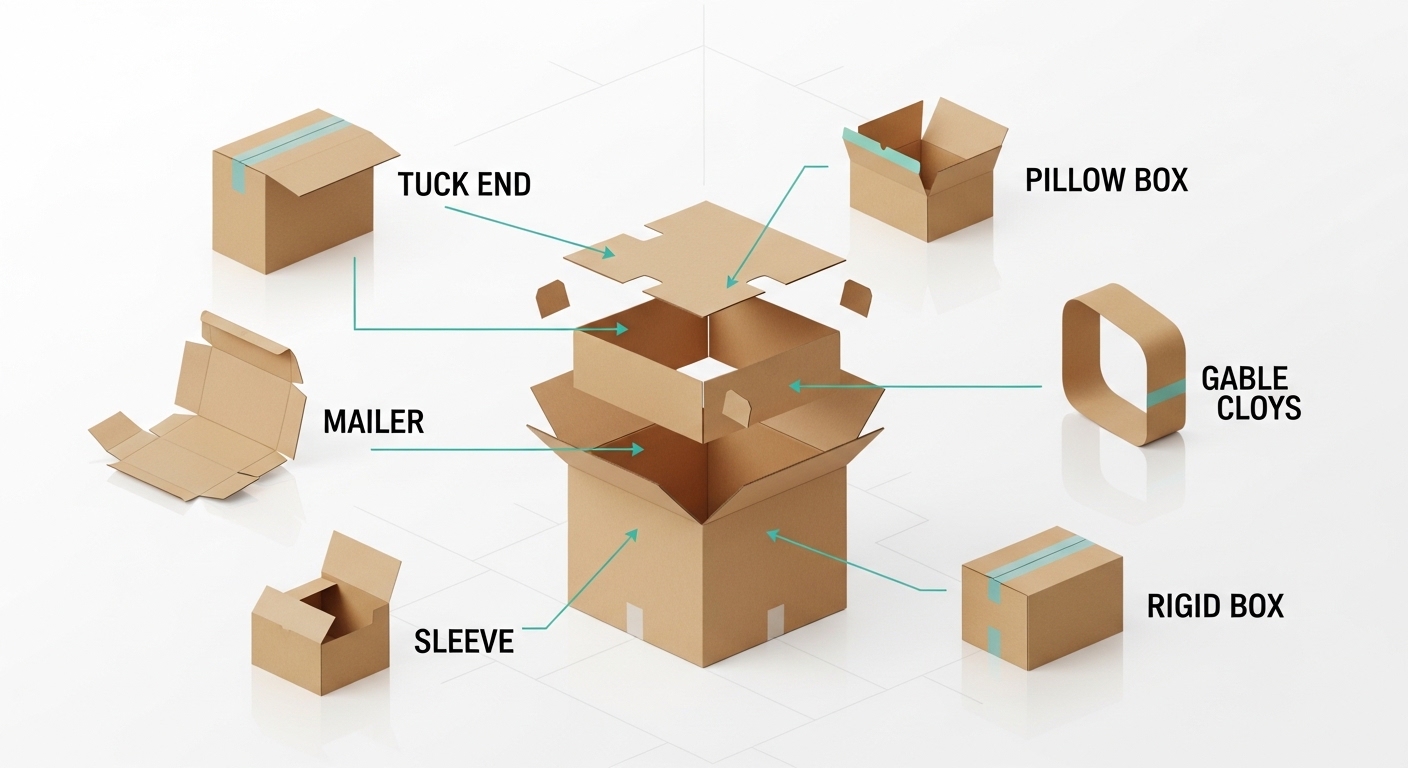
1. Tuck End Boxes (Reverse Tuck & Straight Tuck)
The most common retail packaging style. Tuck end boxes have flaps that tuck into the box to close it — no glue needed for assembly.
- Reverse tuck: top and bottom flaps open from opposite sides (most popular)
- Straight tuck: both flaps open from the same side
- Best for: cosmetics, pharmaceuticals, food, electronics, gifts
- Pros: cost-effective, easy to assemble, great print surface
- Cons: not ideal for heavy items; less secure closure than glued boxes
- Typical material: 300–400gsm art card or kraft board
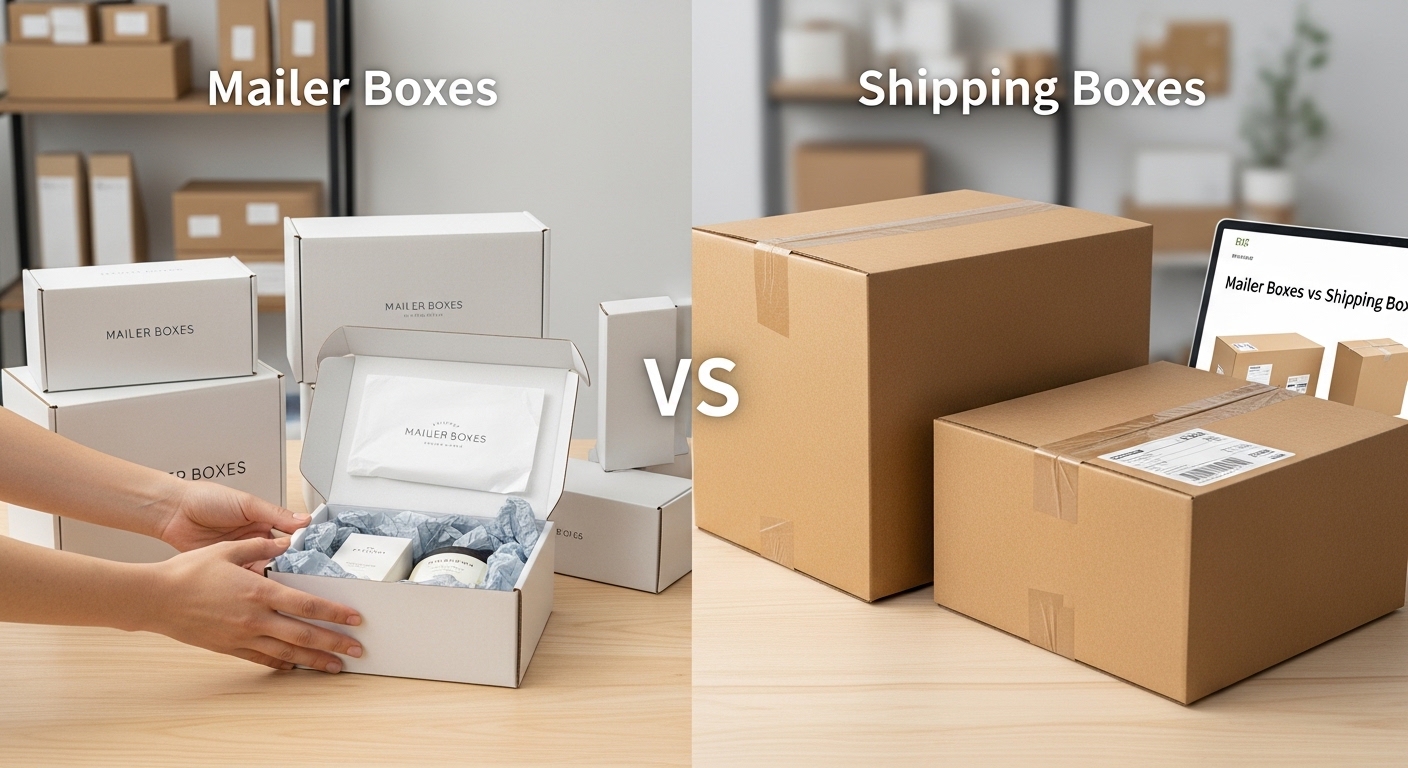
2. Mailer Boxes
A one-piece box with a hinged lid that folds over and tucks in. The go-to choice for e-commerce and subscription services.
- Best for: e-commerce, subscription boxes, gift sets, clothing
- Pros: premium unboxing experience, printable inside and out, self-locking (minimal tape), sturdy construction
- Cons: slightly higher cost than basic shipping boxes
- Typical material: E-flute or B-flute corrugated board
3. Sleeve Boxes (Tray & Sleeve)
A two-piece box where an outer sleeve slides over an inner tray. Think of a matchbox — the sliding mechanism creates a reveal moment that feels premium.
- Best for: luxury products, tech accessories, premium food, gift sets
- Pros: exceptional unboxing experience, very premium feel, great for shelf display
- Cons: higher production cost, more complex to manufacture
- Typical material: rigid board or heavy art card
4. Rigid Boxes (Set-Up Boxes)
The premium standard. Rigid boxes are made from thick chipboard wrapped in printed paper or fabric. They don't fold flat — they're pre-assembled and maintain their shape permanently.
- Best for: luxury goods, jewellery, watches, premium spirits, high-end electronics
- Pros: the most premium look and feel, excellent protection, reusable
- Cons: most expensive option, higher storage and shipping costs (don't ship flat)
- Typical material: 2mm chipboard wrapped in 128gsm art paper
5. Shipping Boxes (RSC)
The Regular Slotted Container — the workhorse of the packaging world. Four flaps fold together on top and bottom, sealed with tape.
- Best for: shipping, warehousing, bulk products, B2B
- Pros: cheapest option, excellent protection, available in many sizes, ships flat
- Cons: limited branding appeal, requires tape, basic appearance
- Typical material: single or double-wall corrugated board
6. Pillow Boxes
A curved, pillow-shaped box that creates a soft, elegant presentation. Usually made from a single die-cut sheet that folds together.
- Best for: jewellery, small gifts, wedding favours, cosmetics samples
- Pros: unique shape, eye-catching, elegant, easy to assemble
- Cons: limited to small, lightweight items
- Typical material: 300gsm art card or kraft
7. Gable Boxes
A box with a built-in handle at the top, shaped like a house gable. Popular for takeaway food, party favours, and gift packaging.
- Best for: food takeaway, gifts, party favours, hampers
- Pros: built-in carry handle, fun shape, easy to assemble
- Cons: limited print area on the handle section
8. Display Boxes (Counter Display Units)
Open-top boxes designed to sit on retail counters or shelves, showcasing the products inside. They combine packaging with point-of-sale display.
- Best for: retail POS, impulse-buy products, sachets, small items
- Pros: doubles as packaging and display, drives impulse sales
- Cons: only suitable for retail environments
How to Choose the Right Box
Consider these four factors:
- Product type & weight — heavy items need corrugated; lightweight items suit art card
- Sales channel — e-commerce favours mailer boxes; retail favours tuck-end or display
- Brand positioning — luxury brands need rigid or sleeve; value brands suit tuck-end or RSC
- Budget — start with the most cost-effective option that still represents your brand well
Not sure which box type is right for your product? Contact our team — we'll recommend the best option and send you free samples.
Choosing the Right Box Style
QPack manufactures every style in this guide — tuck-end cartons and rigid boxes, mailer boxes and sleeve-and-tray sets — made to your exact dimensions from 50 units. Not sure which style fits your product? Ask us for a free recommendation and quote.