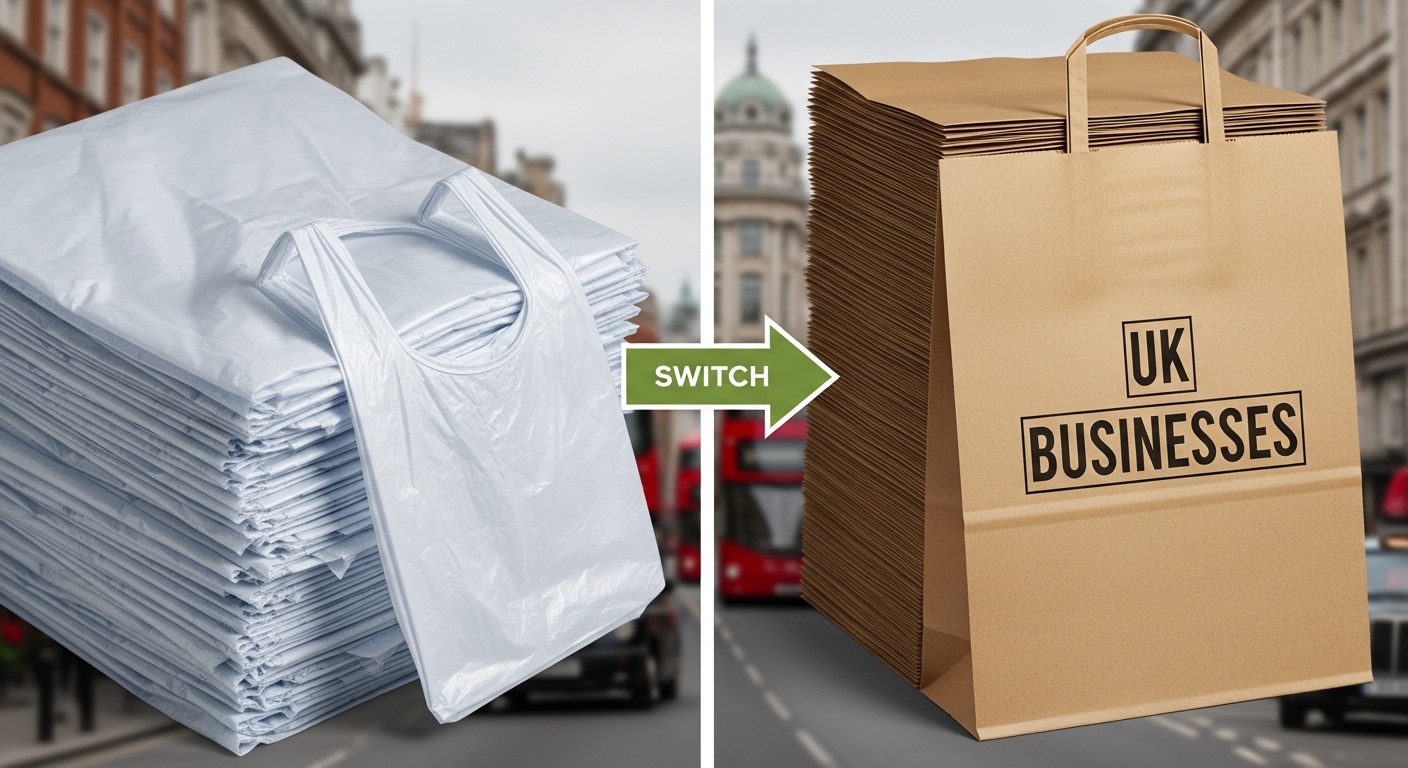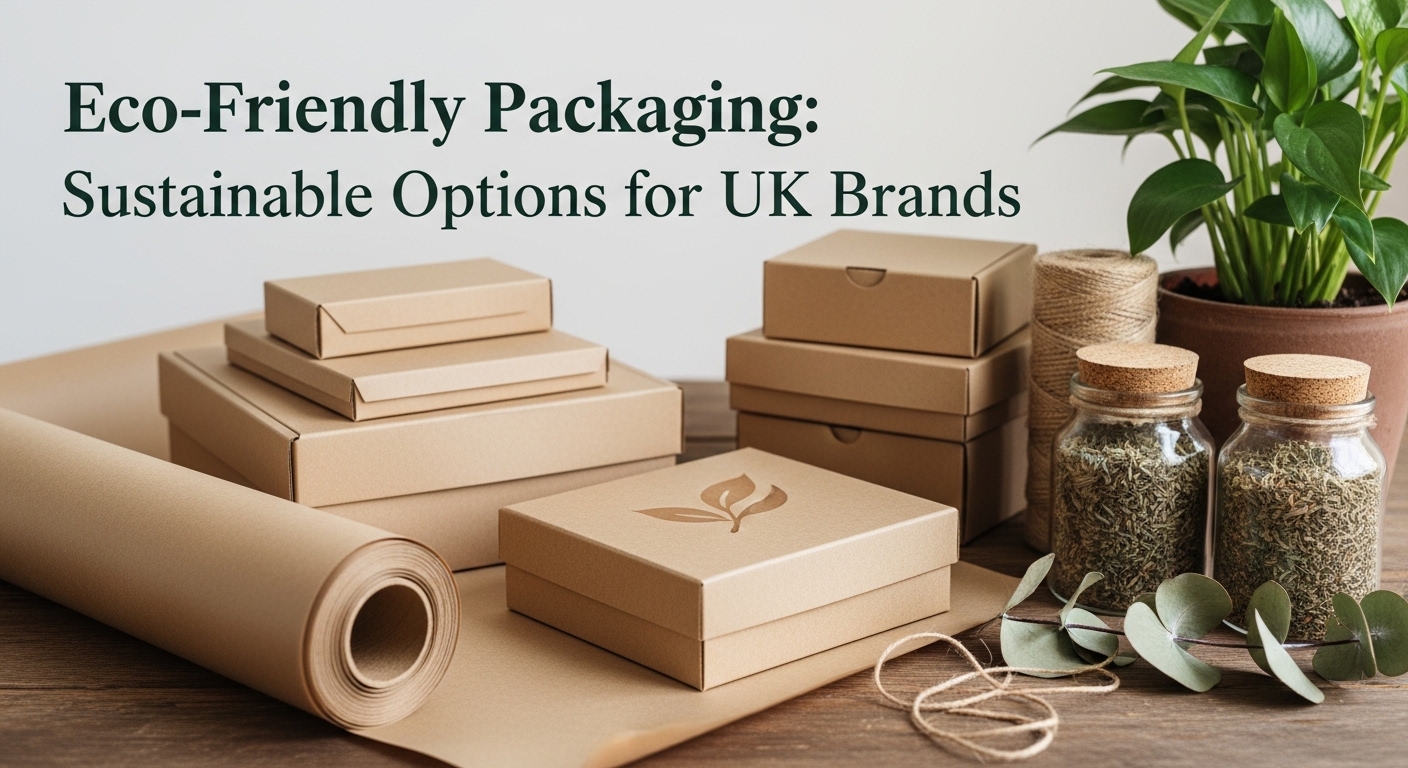
Quick answer: The most sustainable packaging options for UK businesses in 2026 are FSC-certified cardboard, recycled kraft paper and plastic-free finishes. Recyclable corrugated boxes and kraft paper bags offer the best balance of eco-credentials, cost and customer perception — and both are kerbside-recyclable across virtually all UK councils.
Sustainability is no longer optional for UK businesses. With growing consumer demand, stricter regulations, and Extended Producer Responsibility (EPR) coming into full effect, switching to eco-friendly packaging is both a smart business decision and an environmental responsibility.
This guide breaks down your options — what works, what doesn't, and how to make the switch without blowing your budget.
Why Sustainable Packaging Matters in 2025
- Consumer demand: 73% of UK consumers say they would change their purchasing habits to reduce environmental impact (Nielsen)
- Regulatory pressure: the UK Plastic Packaging Tax charges £210.82 per tonne on packaging with less than 30% recycled content
- Brand differentiation: sustainable packaging sets you apart in crowded markets and builds customer loyalty
- Cost savings: lighter, right-sized packaging reduces material costs and shipping fees
Sustainable Packaging Materials Explained
Recycled Cardboard & Corrugated Board
The backbone of sustainable packaging. Corrugated cardboard is made from up to 80% recycled content and is widely recyclable through kerbside collections across the UK. It's strong, lightweight, and cost-effective.
FSC-Certified Paper & Board
The Forest Stewardship Council (FSC) certification guarantees that paper and board come from responsibly managed forests. Using FSC-certified materials shows your customers that you're serious about sustainability — and it's often the same price as non-certified options.
Kraft Paper
Unbleached kraft paper has a natural, eco-friendly aesthetic that resonates with environmentally conscious consumers. It's fully recyclable, biodegradable, and compostable. Perfect for bags, wrapping, void fill, and mailer boxes.
Soy & Water-Based Inks
Traditional petroleum-based inks can contaminate the recycling process. Soy-based and water-based inks are a sustainable alternative that still deliver vibrant, high-quality print results — and they make your packaging easier to recycle.
Biodegradable Packaging Peanuts & Void Fill
Replace polystyrene peanuts with starch-based alternatives that dissolve in water. Shredded recycled paper and corrugated paper padding are also excellent void-fill options.
Materials to Avoid
- Excessive lamination — laminated card is difficult to recycle. Use aqueous coating instead for a glossy finish.
- Mixed materials — packaging that combines plastic and paper (like plastic windows in cardboard boxes) is hard to recycle.
- Single-use plastic — polythene bags, bubble wrap, and plastic tape should be replaced with paper-based alternatives.
- Non-recyclable foils — metallic foil stamping looks premium but can prevent recycling. Consider metallic inks instead.
How to Reduce Packaging Waste
- Right-size your packaging — use the smallest box that safely protects your product. This reduces material usage, void fill, and shipping costs.
- Eliminate unnecessary layers — do you really need a box inside a box? Simplify where possible.
- Design for reuse — sturdy, attractive boxes get kept and reused by customers, extending your brand exposure.
- Use mono-materials — packaging made from a single material type is easier to recycle.
- Add recycling instructions — tell customers exactly how to recycle your packaging with clear on-pack labelling.
The Business Case for Going Green
Sustainable packaging doesn't have to cost more. In many cases, it actually saves money:
- Lighter packaging = lower shipping costs
- Right-sized boxes = less material and void fill
- Avoiding the Plastic Packaging Tax = direct cost savings
- Improved brand perception = higher customer lifetime value
At QPack, all our packaging uses FSC-certified materials and eco-friendly inks as standard. We help UK brands create beautiful, sustainable packaging that doesn't compromise on quality or break the bank. Get in touch to discuss your project.
Switching to Sustainable Packaging
QPack offers FSC-certified board, recycled materials and plastic-free finishes across our whole range — from custom boxes to paper bags and gift packaging. Minimum orders start at just 50 units. Get a free quote with sustainable options included as standard.