How to Measure a Box for Your Product
Prepare clear box dimensions before requesting a quote. Learn what to measure, how to distinguish internal and external size, and where inserts and wrapping affect the fit.
Practical guidance for choosing packaging, preparing a clear brief and comparing the details that matter.
Your specification. Your artwork. A clear quotation.
Whether you are ordering your first mailer or reviewing a label material, a clear specification makes the next step easier. Use these guides to work through dimensions, construction, artwork and cost. If a detail is still undecided, add it to your quote request and ask us to advise.
Find your fit
Compare the details, then tell us what you have in mind.
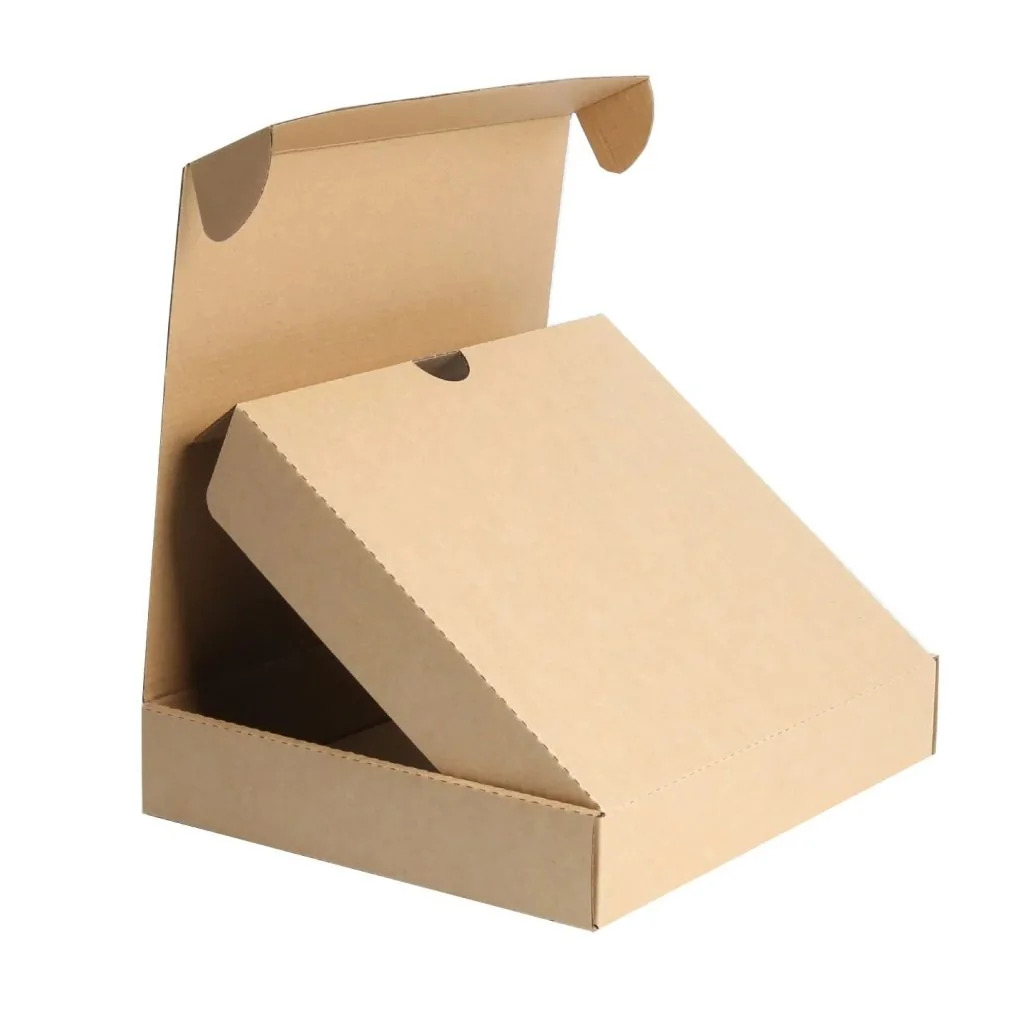
Prepare clear box dimensions before requesting a quote. Learn what to measure, how to distinguish internal and external size, and where inserts and wrapping affect the fit.
Compare label materials by the job they need to do. Start with the surface, conditions and artwork rather than choosing only by appearance.
Understand the details that change a packaging quotation and make comparisons clearer. Size, quantity, construction, artwork and delivery all belong in the brief.
Choose paper by its intended contact and use. Packaging tissue and food wrapping paper may look similar, but their specifications serve different purposes.
Compare tuck-end, mailer, sleeve and rigid box constructions.
Complete B2B reference guide to folding boxboards, corrugated flutes, and food barrier papers.
Up-to-date guidance on UK Plastic Packaging Tax, EC 1935/2004 food contact, and kerbside recyclability.
Essential technical specifications for bleed margins, dieline tolerances (±0.5mm), and Pantone PMS calibration.
Lead times, production windows, digital 3D proofing protocols, and mainland UK delivery logistics.
Matching base substrate properties to product weight and environmental exposure:
Precision die-cutting standards ensuring jam-free automated and manual assembly:
Achieving consistent brand reproduction across diverse print substrates:
Navigating UK and EU packaging mandates with zero tax penalties:
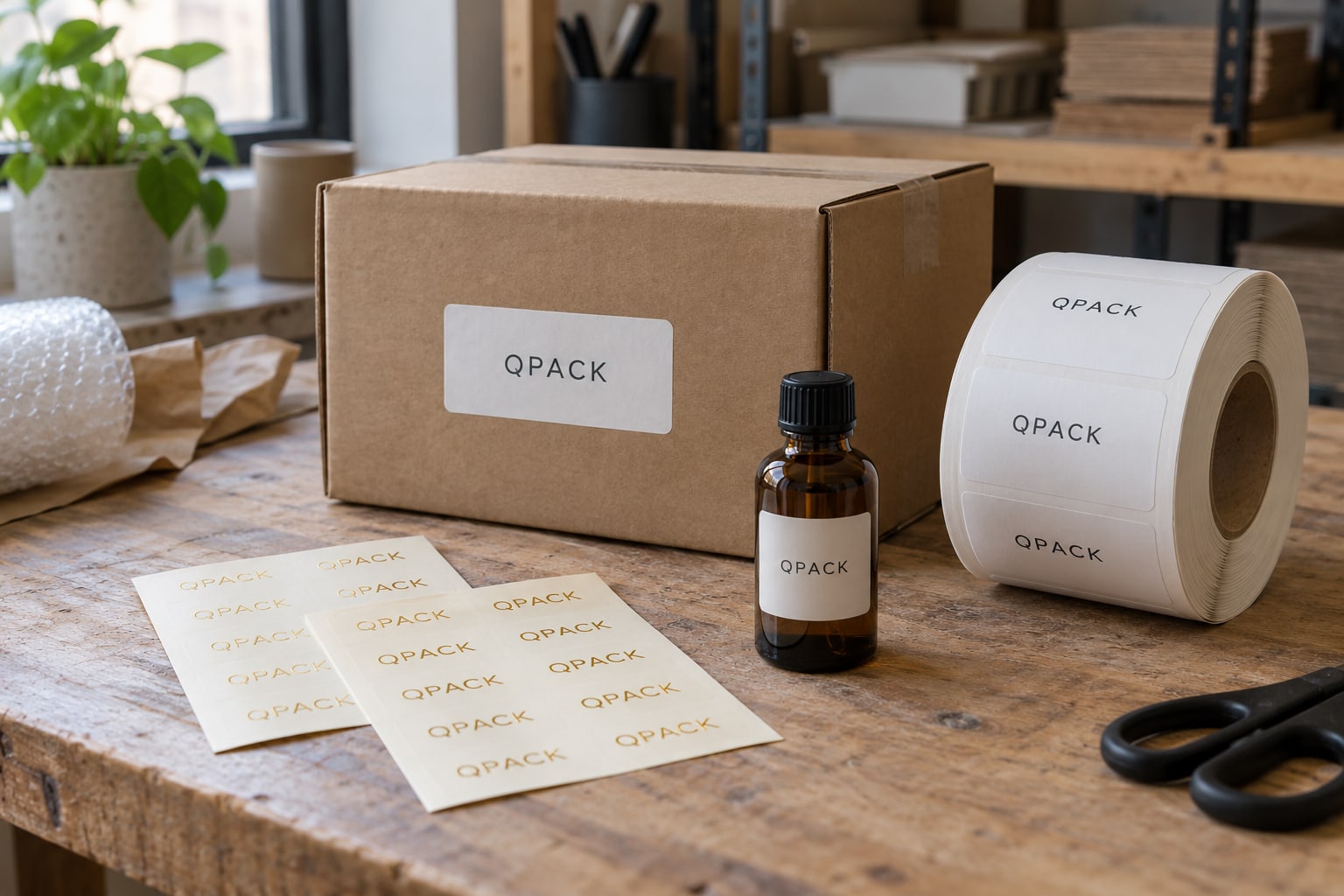 Bespoke UK Production
From initial idea to your doorstep, here is how easy it is to order custom packaging with QPack.
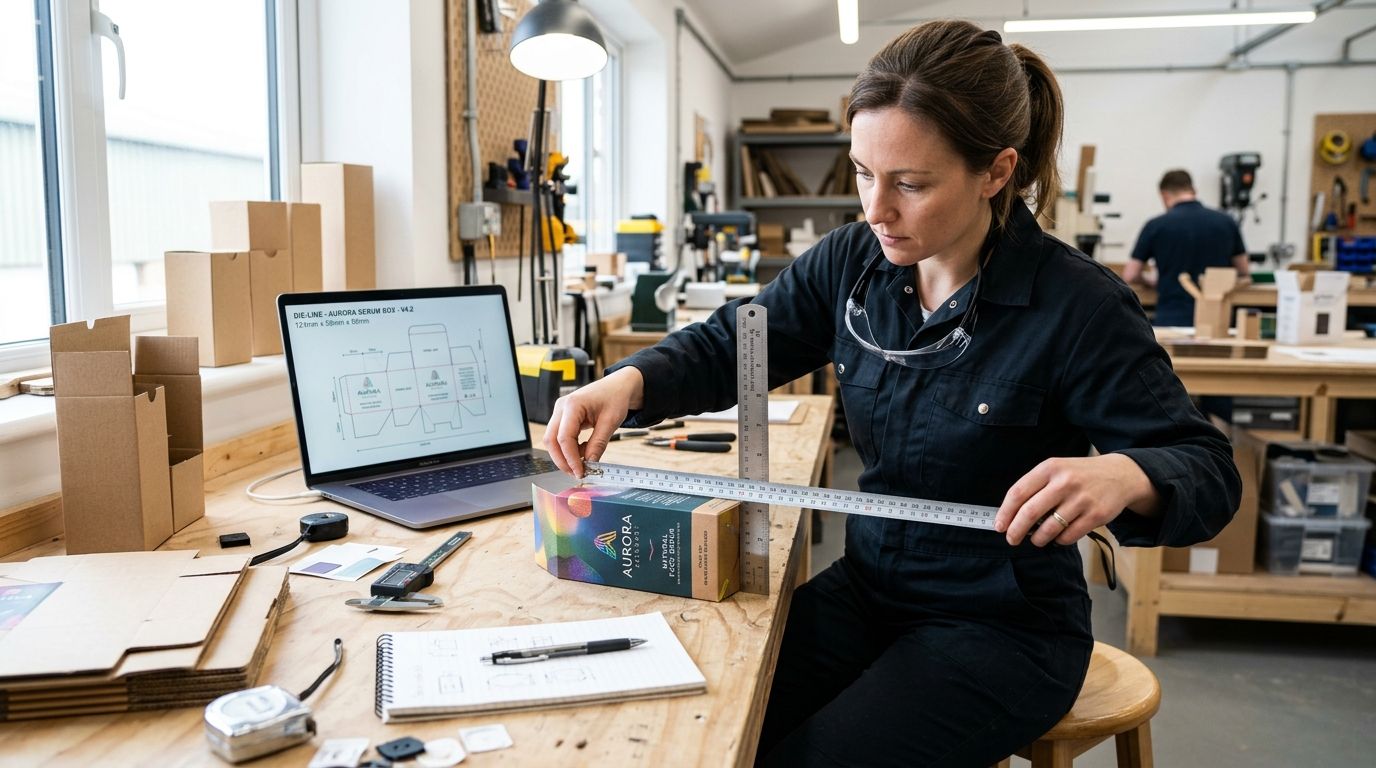
Tell us your product size and quantity. We give you the exact box dimensions and a free template for your design.
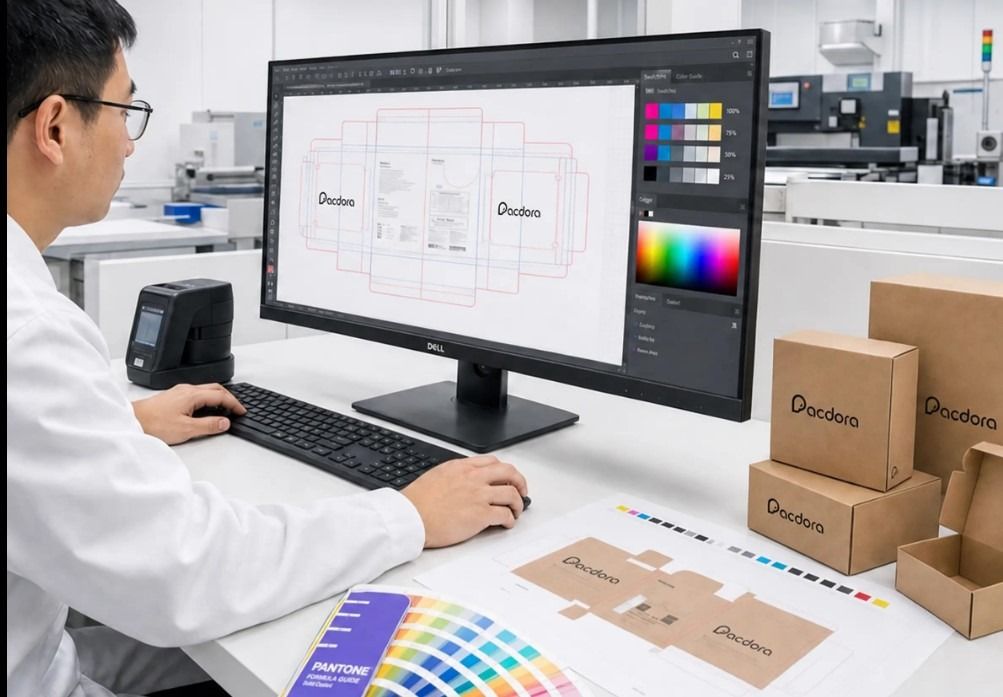
Send us your logo or artwork. We create an interactive 3D digital model so you can check your box before printing.
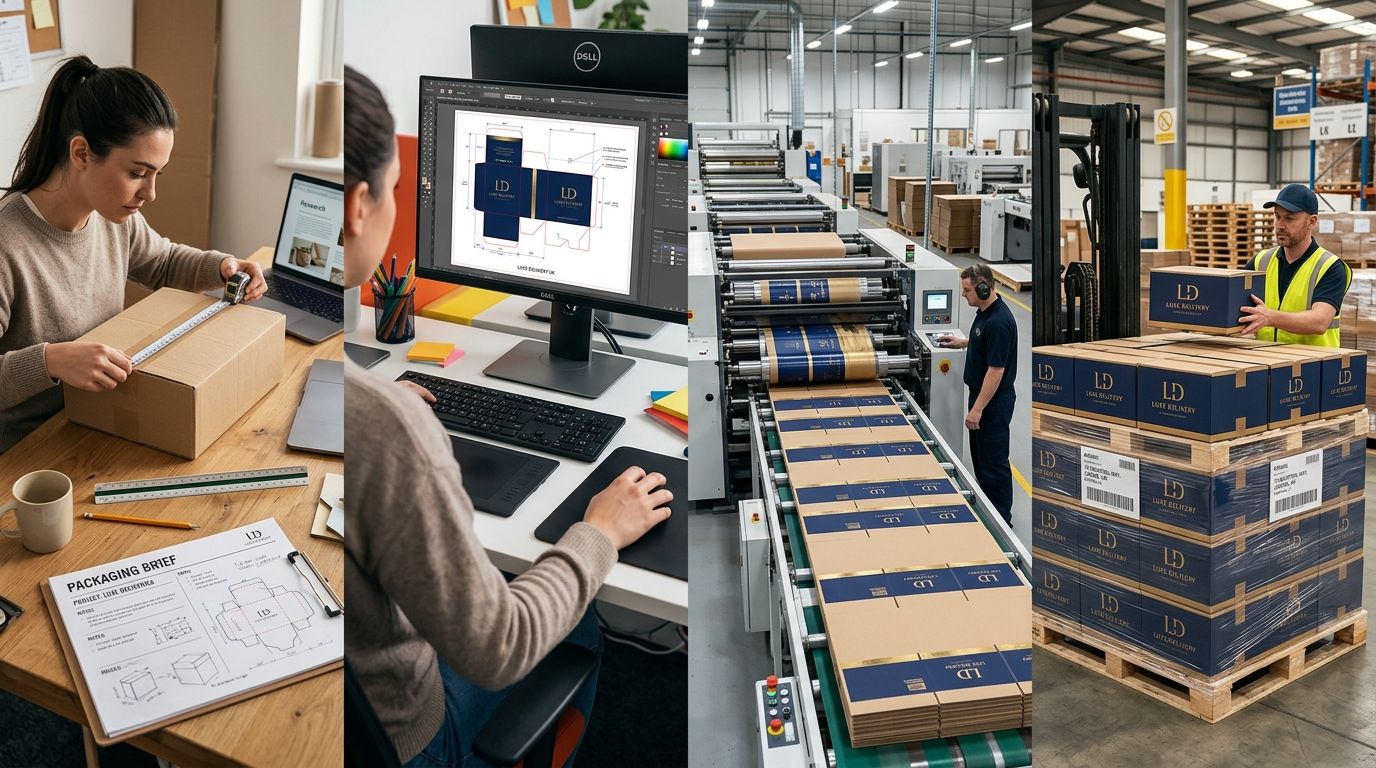
Your boxes are printed in vibrant color and pre-creased so they fold up quickly with crisp, clean corners.
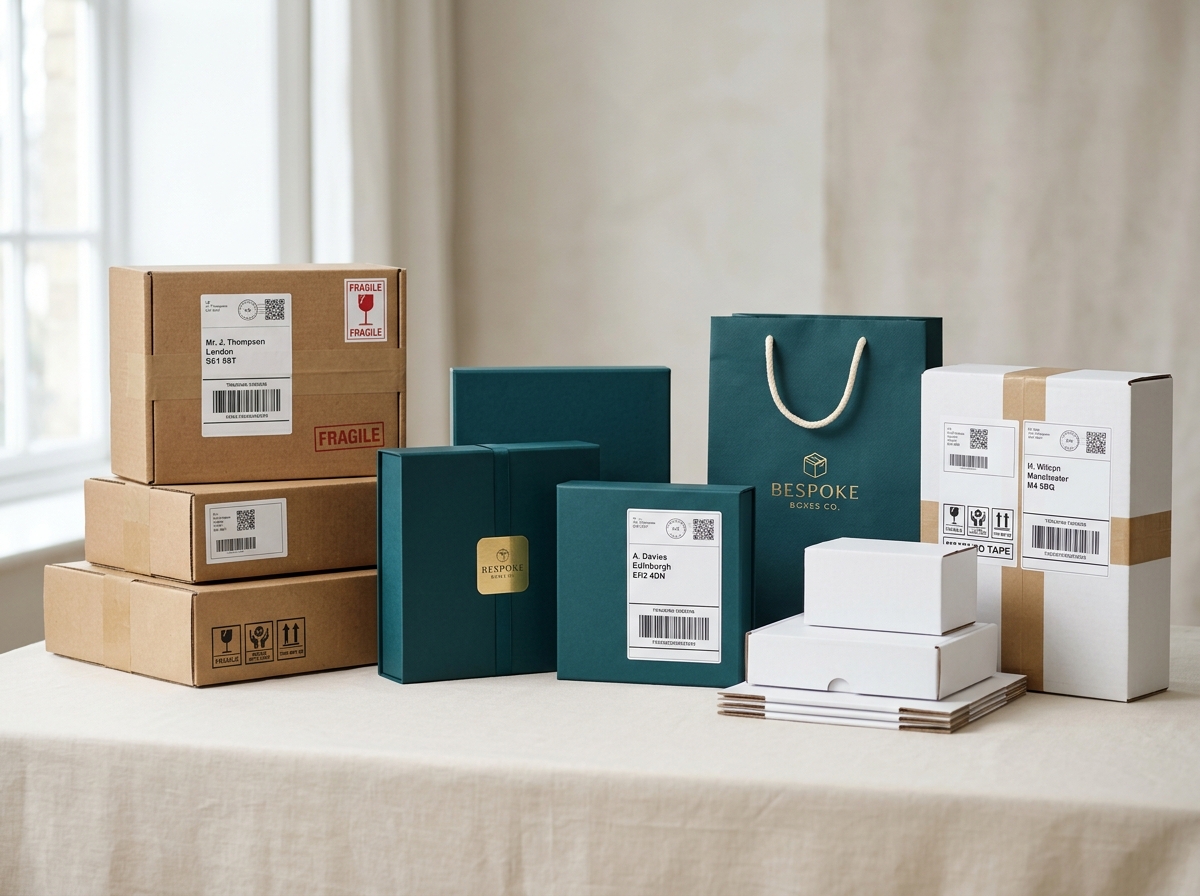
Every batch is inspected for quality, packed flat to save your storage space, and shipped tracked to your door.
Clear Answers
Clear answers on sizing, minimum order runs, artwork proofs, board calipers, and free tracked UK delivery.
Internal dimensions represent the usable space inside the box (Length x Width x Depth) where your product must fit. External dimensions include the thickness of the paperboard or corrugated flute walls. Always specify internal dimensions to packaging manufacturers to prevent your product from being too tight or crushed.
GSM (Grams per Square Metre) indicates the raw weight of the paper sheet, whereas Caliper (measured in microns or points) indicates physical sheet thickness. Two boards with the same 300gsm weight can have different thicknesses depending on pulp composition, calendering, and bulk density.
Digital printing is fastest and most economical for short runs (250 to 2,000 units) because it requires no print plates. Lithographic (Litho) printing is the gold standard for high-end retail cartons with photographic detail and luxury finishes. Flexographic (Flexo) printing is the most cost-effective method for high-volume corrugated boxes, paper bags, and food wraps exceeding 10,000 units.
The 2024 UK legislation prohibits single-use plastic plates, bowls, and expanded polystyrene containers. Commercial packaging must utilize plastic-free aqueous barrier coatings, recyclable food-grade paperboard, or certified home-compostable substrates that are fully accepted in UK municipal kerbside recycling streams.
Artwork should be supplied as a vectorized PDF, Adobe Illustrator (.AI), or EPS file built directly on our supplied CAD dieline template. All fonts must be converted to outlines, photographic images embedded at 300 DPI, colours set to CMYK or specific Pantone PMS spot references, and 3mm bleed included on all cut and crease lines.
Right-sizing your packaging directly reduces dimensional weight (DIM weight) penalties from couriers like DPD, DHL, and Royal Mail. Designing cartons that maximize standard UK Euro-pallet footprints (1200mm x 1000mm) significantly lowers warehousing and logistics transport costs per unit.
Our UK packaging specialists can verify bottle clearances, create tailored structural CAD dielines, and supply physical plain samples.
Let’s make it yours
Tell us what you are packing, your dimensions and quantity. We will help you work through the specification.